There are certain parts of an outfit we spend ages thinking about.
The jacket. The shoes. Whether the trousers actually fit. Whether the shirt works with them.
Then there is the belt.
For a lot of men, choosing one involves opening a drawer, finding something vaguely brown or black and putting it on.
That's a shame, because a belt sits right in the middle of an outfit. Get it right and it quietly connects everything around it. Get it wrong and even good clothes can suddenly look slightly off.
You don't need a drawer full of belts either. Two or three carefully chosen ones can cover almost everything.
First, Stop Thinking of a Belt as Just Something That Holds Up Your Trousers
Obviously, a belt has a practical job.
But if your trousers genuinely cannot stay up without one, there may also be a fit problem worth addressing.
From a style point of view, the belt is better thought of as a bridge between the top and bottom halves of your outfit.
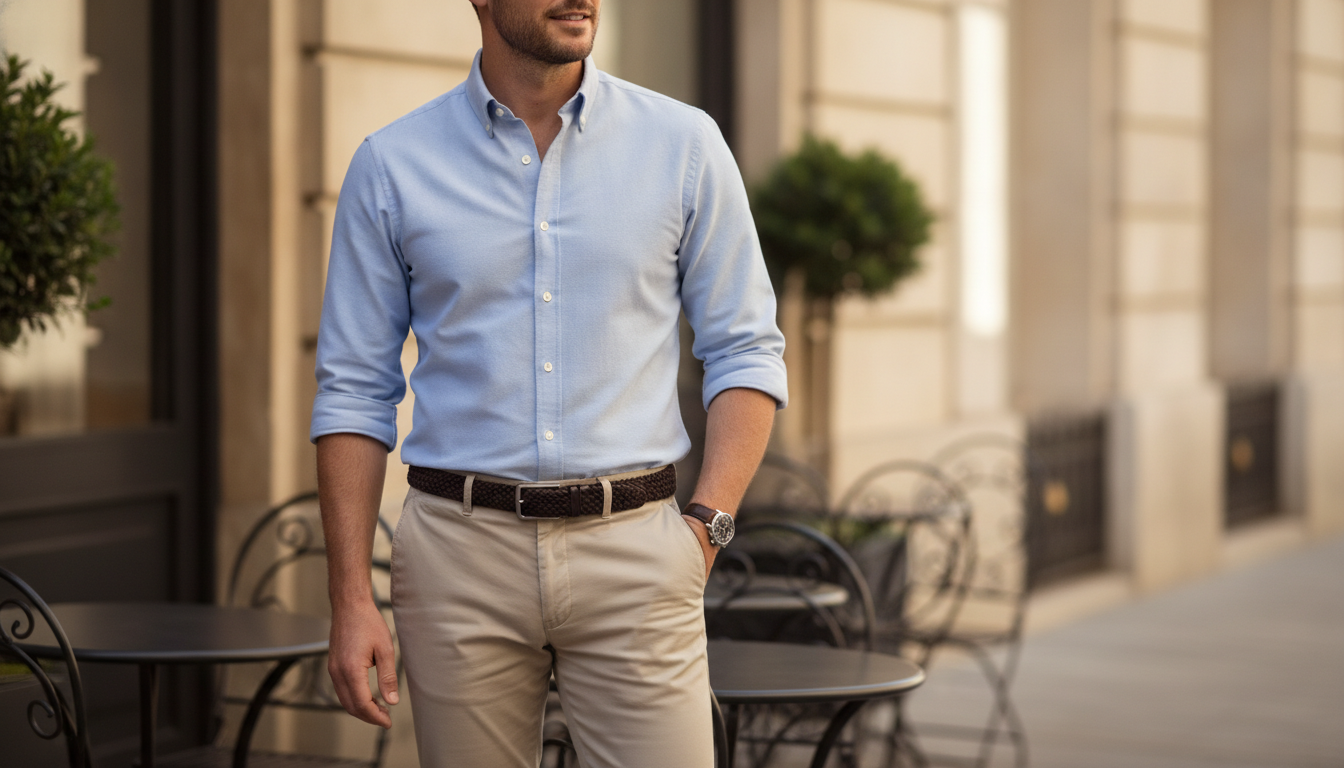
Imagine a pale blue Oxford shirt tucked into stone chinos with brown suede loafers.
Add a simple brown leather belt and everything feels connected.
Now put a thick glossy black belt with a huge silver buckle through the same trousers.
Nothing else has changed, but suddenly the outfit feels wrong.
That's the power of a relatively small detail.
The First Belt I'd Buy: A Simple Brown Leather Belt
If you only own one decent belt, make it brown leather.
Brown works exceptionally well with the colours that appear repeatedly in a timeless men's wardrobe: navy, stone, beige, olive, cream, denim and grey.
Keep the design uncomplicated.
Look for good leather, neat edges and a simple metal buckle rather than enormous branding.
For everyday use with chinos and jeans, you don't want something so thin that it looks like a formal dress belt, nor so thick that it looks like it belongs with work trousers.
Somewhere in the middle gives you far more flexibility.
Do Your Belt and Shoes Have to Match?
This is probably the belt question men hear most often.
The traditional answer is yes.
The more useful answer is: it depends how formally you're dressed.
With a Suit
Keep things simple. Black shoes with a black belt. Brown shoes with a brown belt.
The shades don't have to be absolutely identical, but they should clearly belong together.
With Chinos or Smart-Casual Clothes
You can relax considerably.
A dark brown belt can work perfectly with tobacco suede loafers, for example. You're looking for harmony rather than an exact colour match.
The same applies to texture. Suede shoes don't require a suede belt.
In fact, slightly different textures often make an outfit more interesting.
The Woven Belt Deserves More Attention
If a standard leather belt feels a little too formal, a woven belt is an excellent alternative.
It adds texture without shouting for attention and works particularly well with chinos, linen shirts, knitted polos and loafers.
It's also extremely practical.
Because the buckle pin can usually pass through the weave rather than relying on fixed holes, adjustment is much more precise.
That makes a woven belt particularly comfortable on warmer days when you're wearing lighter, more relaxed clothes.
Brown, tan and navy are the easiest colours to use.
When Should You Wear a Black Belt?
Black belts are useful, but they're not necessarily the universal option people assume they are.
A slim black leather belt is ideal with black formal shoes and smarter trousers.
It also works with monochrome casual outfits.
But if most of your wardrobe consists of navy chinos, blue denim, beige trousers and brown footwear, you'll probably get considerably more use from brown.
Buy for the wardrobe you actually have rather than the wardrobe you think you're supposed to have.
What About Suede?
Suede is one of the easiest ways to make an outfit feel a little more considered.
A brown or tan suede belt works beautifully with chinos and casual tailoring, particularly alongside loafers or suede Chelsea boots.
It is softer visually than polished leather, which makes it useful when a normal leather belt feels slightly too formal.
The downside is maintenance.
Suede doesn't particularly enjoy heavy rain, so this probably shouldn't be your only belt.
Get the Width Right
Belt width is easy to overlook, but it changes the character of the belt considerably.
Narrower belts generally feel smarter.
Wider belts feel more casual and substantial.
If you're wearing tailored trousers, a huge chunky belt will overpower them. Likewise, a very thin formal belt can look strangely delicate with heavyweight denim.
For a versatile everyday belt, choose something somewhere between those extremes.
It should comfortably fill the belt loops without looking squeezed into them.
The Buckle Shouldn't Be the Main Event
There are exceptions, of course, but for timeless style I prefer a buckle that you barely notice.
Simple silver, brass or darker metal hardware ages far better than elaborate novelty buckles.
It's the same principle we use throughout a classic wardrobe.
If the design depends on attracting attention, there's a reasonable chance you'll become tired of it.
Good leather and a simple buckle don't need to prove anything.
How Long Should a Belt Be?
A properly sized belt should fasten comfortably around the middle holes, leaving enough leather to pass through the keeper without producing a huge tail around your waist.
Don't rely blindly on your trouser size because belt sizing varies between manufacturers.
Check the brand's measurements before ordering.
If you're buying in a shop, wear the sort of trousers you expect to use the belt with and simply try it on.
Cheap Leather Can Become Expensive Very Quickly
A £15 belt isn't necessarily a bargain if the surface cracks after six months.
This is one of those accessories where spending a little more can make sense because you'll potentially wear it hundreds of times.
Look for full-grain or good-quality genuine leather with solid stitching and hardware.
Don't become obsessed with labels, though.
A beautifully made belt from a small leather goods company can be a much better purchase than a designer belt whose biggest feature is the logo on the buckle.
Think cost per wear.
If you wear a £60 belt twice a week for five years, it has cost pennies each time you put it on.
Three Belts Could Be All You Need
If I were building a useful belt collection from scratch, I'd keep it remarkably simple.
- Medium brown leather: your everyday belt for chinos, denim and smart-casual outfits.
- Black leather: for formal trousers, black shoes and smarter occasions.
- Brown or tan woven leather: for relaxed outfits, linen, summer clothes and textured smart-casual looks.
That's enough for most men.
If you regularly wear tailoring, you might eventually add a slimmer dress belt. If you love suede footwear, perhaps add suede later.
But don't buy six variations before you've found three you'll actually wear.
Look at the Whole Outfit
The easiest way to know whether you've chosen the right belt is to stop looking at the belt.
Stand in front of a mirror and look at everything together.
Does the belt connect naturally with the shoes?
Does its width suit the trousers?
Does the buckle suddenly become the first thing you notice?
If the belt seems to disappear into the outfit while somehow making everything look more complete, you've probably got it right.
The Best Accessories Don't Shout
Timeless men's style is full of relatively boring objects.
A good Oxford shirt. Proper chinos. Brown loafers. A simple watch. A leather belt.
None is particularly exciting hanging on its own in a shop.
Put them together properly, though, and that's where the difference appears.
You don't need a belt covered in logos or a collection in every possible colour.
Start with one good brown leather belt that works with the clothes you already own. Add black if you regularly dress formally. Then consider a woven version when you want something more relaxed.
Small details don't need to be complicated.
They just need to be right.
For more practical men's style advice, outfit inspiration and products worth adding to your wardrobe, explore more guides here on Cock Your Hat.